When the EAP (English for Academic Purposes) enrolment numbers landed in my inbox on January 16, 2026, I actually said “Whoop!” out loud. I couldn’t help it: 2,090 students!
It felt like a moment, one that held years of effort, hope, frustration, creativity, and belief. And it reminded me just how far our community has come.
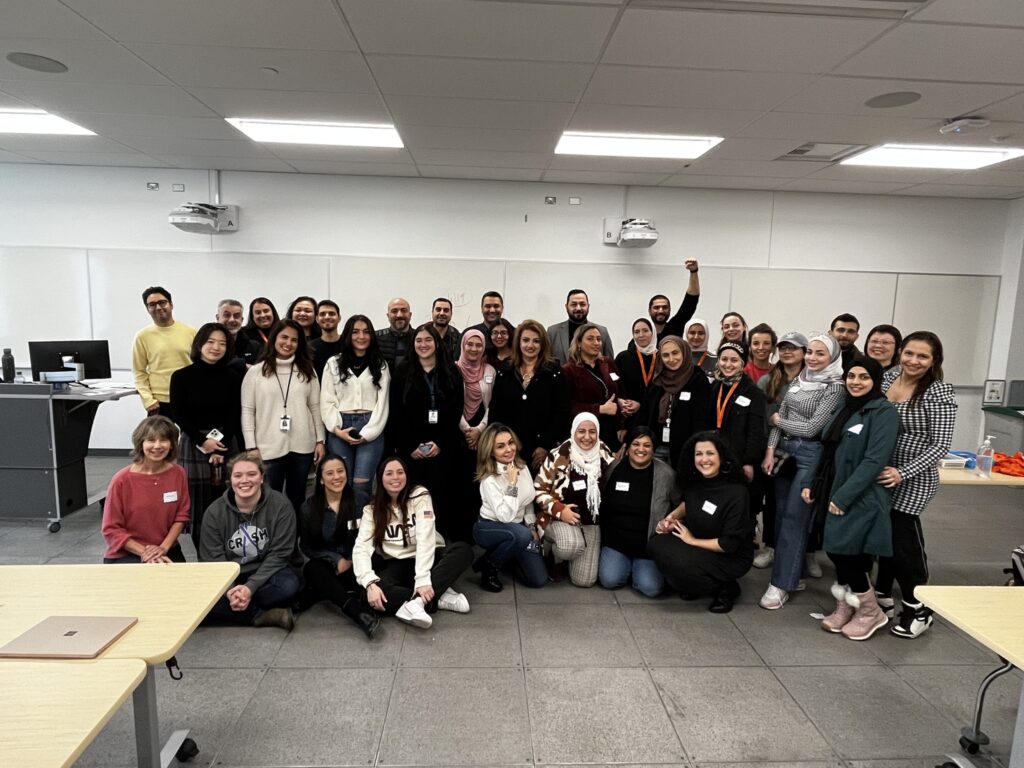
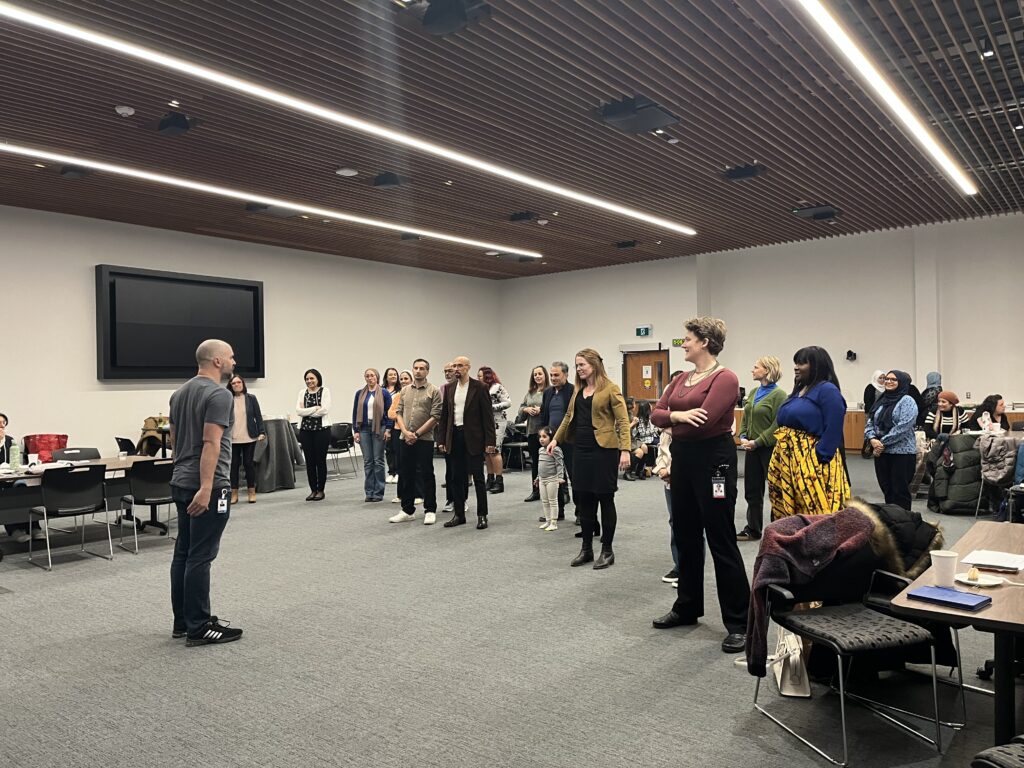
Welcome Back celebration with EAP faculty, administrators, and students at HMC.
*
Growing Together
My story with Sheridan started back in 2004 when I was a sessional ESL instructor teaching a single class of mixed learners: international students sitting beside permanent residents, all learning English but for different reasons.
Two years later, those shared beginnings evolved into two distinct programs: a fee-paying ESL program for international learners and Language Instruction for Newcomers to Canada (LINC), a government-funded program serving domestic learners. For several years, ESL and LINC operated alongside one another within the School of Community and Liberal Studies (SCLS), under the astute leadership of our late Associate Dean, Janet Gambrell, who had been at the helm of the program from the outset. [1]
The teachers are kind and patient; they really care about us and try their best to help each of us. I really enjoy the discussion and the exercises sessions with my peers. 100% I recommend this program to everyone who want to improve their English, it is really helpful.
-Mbouoh Fatimat
As Sheridan evolved, particularly during its early efforts to achieve university designation, SCLS became the Faculty of Liberal Arts and Access (FLAA), and later, eventually the Faculty of Humanities and Social Sciences (FHASS). LINC eventually moved into the School of Workforce Development and later the Faculty of Continuing and Professional Studies (FCAPS) until its discontinuation in March 2020.
Amid every institutional shift, the heart of our ESL work stayed the same: helping newcomers and students build a home in Canada, one class, one conversation, one brave attempt at a new language at a time.
*
Stepping into Leadership
When I stepped into the Associate Dean role in 2014, our ESL program had 269 students across three campuses (Trafalgar, Davis and HMC). We were a small ESL program compared to other GTHA colleges, but I saw possibility everywhere.
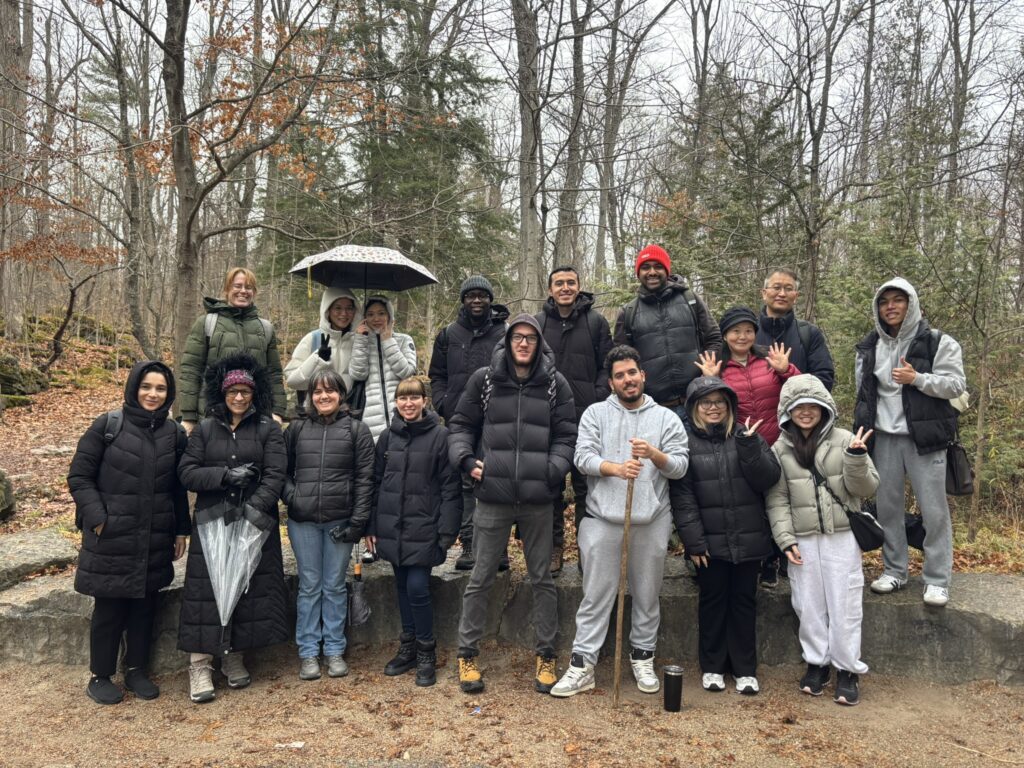
Level 2 students exploring Crawford Lake during a field trip with Professor Hayley Goodwin.
I spent months visiting classes, talking with students, and listening to faculty. I came to understand something important: growth wouldn’t come from top‑down direction; it would come from trusting our teachers.
In response, we created professional development opportunities that invited faculty to experiment, share, and learn from one another. From this, Show ’n Share was born, a faculty‑only space with no administrators. It became a place to test new ideas, openly discuss what didn’t work, explore research, laugh together, and learn together. Over time, it grew into a community of practice grounded in curiosity rather than compliance.
Joining Sheridan College and the EAP program has helped me greatly improve my English skills. It has also increased my confidence and allowed me to communicate more easily with others in my new community. After completing the EAP program, I feel prepared to join another academic program, and I am confident that this education will open more opportunities for me as I integrate into in my new society.
-Masumeh Jafari
*
Innovation, One Classroom at a Time
Slowly, the magic started to show.
Someone dug forgotten iPads out of storage and used them to reinvent her reading and writing class.
Someone else invited an Indigenous Elder for a smudging ceremony — students responded by sharing their own cultural traditions.
Another built an assessment around a David Suzuki campus visit, weaving environmental issues into language learning.
Classes became lively, warm, and full of connection. Students noticed. They told their friends. And our numbers slowly climbed.
By 2019, Davis campus enrolment began to taper due to shifts in settlement patterns, but Trafalgar and HMC continued to flourish.
*
The Pandemic Pivot
As enrolment grew beyond 500 students, the ESL Program Manager role was created in January 2020 to support the program’s daily operations. This role continues to be pivotal in planning professional development for faculty, essential to sustaining high levels of student engagement, and in overseeing ESL Club activities that support the vital social dimension of language learning.
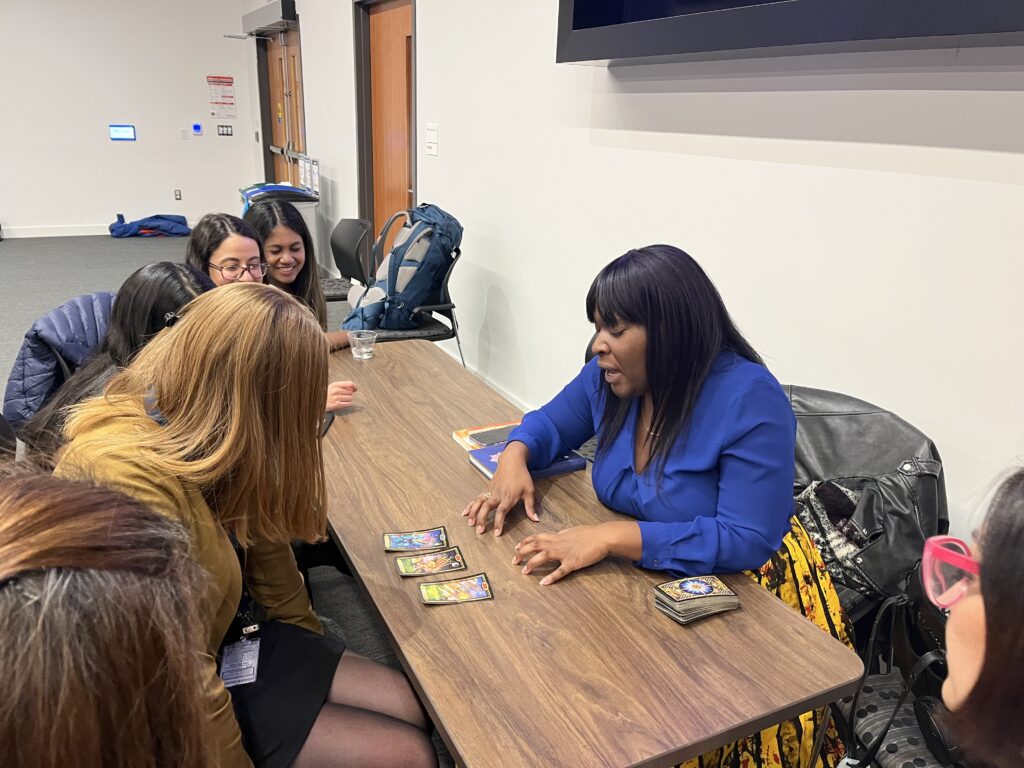
Professor Sherstel Grant reading tarot cards for EAP colleagues at the 2024 Celebration of Belonging, HMC.
Then in March, the world stopped. Overnight, everything went online. Faculty were anxious; many had never taught English digitally. The questions were endless: How do we assess listening and speaking skills? How do we support students as they navigate SLATE for the first time? How do we build a sense of community in a virtual classroom?
But what happened next was one of the most beautiful things I’ve seen in my career.
People showed up for each other. At all hours. Sharing resources. Troubleshooting. Figuring out SLATE features together. Someone found the audio‑feedback tool, and within hours, everyone was using it. Meetings were constant, chaotic, and deeply collaborative. It was stressful, but it was also community at its finest.
*
Choosing Our Own Path
By fall 2022, enrolment had climbed to 912, due in part to the flexibility of online learning. While many institutions returned to fully in‑person delivery, we did not. We chose to meet the moment by continuing to offer online teaching and by placing our trust in our students and our faculty. We clarified academic integrity expectations, strengthened onboarding for new instructors, and supported effective, thoughtful assessment design.
By fall 2023, with 1,405 students, we introduced the role of the level leads—one for each of the five program levels—to strengthen curriculum coherence, provide mentorship, and strengthen communication between faculty and administration. Their leadership has been indispensable as the program scaled.
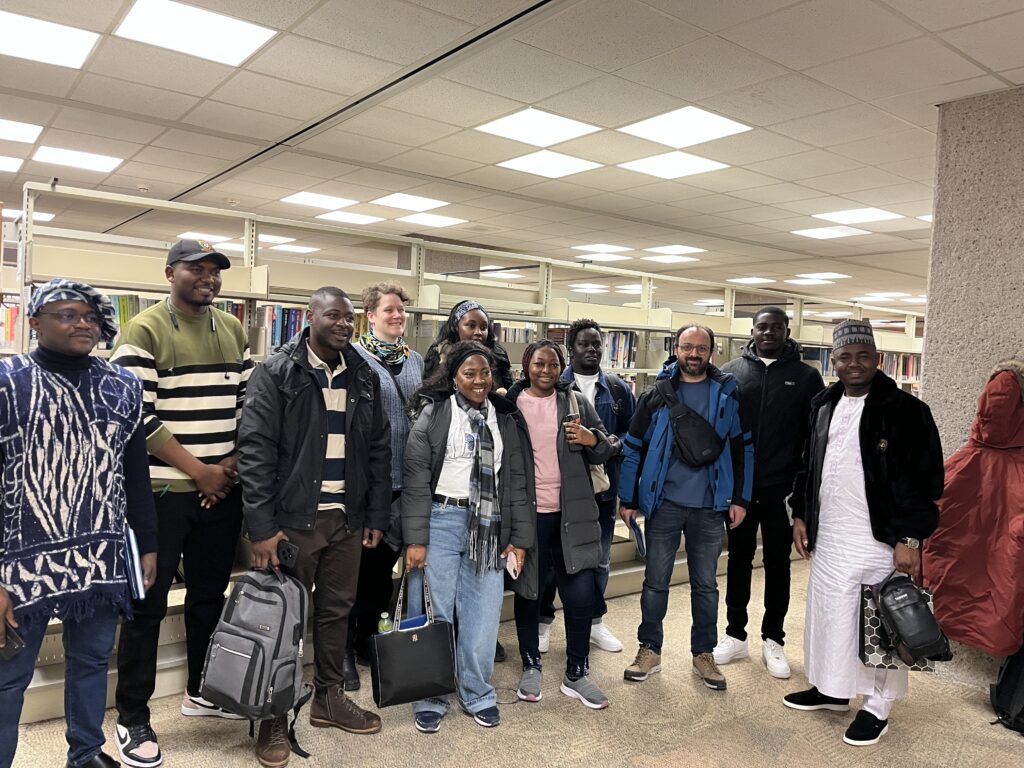
Professor Kristen Hope with her Ottawa-based online students during a public library tour in Ottawa
By spring 2025, we had 1,807 students. Learners from across Ontario, representing countries of origin such as Cameroon, Saudi Arabia, Jordan, Türkiye, Vietnam, Colombia, Venezuela, and many others, joined our classrooms, both virtual and in person.
The EAP program really helped me improve my academic English, especially with writing essays and organizing my ideas in a clear way. It also helped me feel more confident when speaking and participating in class, which is very important for my future as a pharmacist in Canada. I found the presentations and group discussions very helpful because they gave me more chances to practice. I also really appreciated the supportive teachers and the positive environment in the class. I would definitely recommend this program to anyone who wants to improve their English and be ready for college.
— Mirna Jalloul
A New Chapter Begins
In fall 2025, we undertook a major transformation: moving from two 7 week modules to a single 14 week module and renaming the program to English for Academic Purposes (EAP), a name that more accurately reflects the academic skills we teach.
After extensive cross‑institutional consultation and approvals, these changes launched in winter 2026. And on Day 10 of the semester, we reached a milestone that once seemed unimaginable: 2,090enrolled students!
This course literally changed my life. It helped me to be resilient and positive. The teaching and learning activities were very helpful and I am more equipped to encounter future classes. I most enjoy the writing and reading class. I would recommend this program to anyone who needs to improve their academic English.
-Midodji Houngbedji
When I announced the number at our EAP cluster meeting on January 29th, the room erupted with pride, joy, disbelief. Every person knew they had played a part. And they were right.
This program did not grow because of a single decision, or a single leader. It grew because a community of committed educators, staff, and administrators believed deeply in something bigger than themselves.
*
“All That We Are Is Story”
My favourite Indigenous author, Richard Wagamese, wrote:
Learning muay thai with Professor Tom Nittoly during the 2024 Celebration of Belonging event, HMC.
“All that we are is story. From the moment we are born to the time we continue on our spirit journey; we are involved in the creation of the story of our time here. It is what we arrive with. It is all we leave behind. We are not the things we accumulate. We are not the things we deem important. We are story. All of us. What comes to matter then is the creation of the best possible story we can while we’re here; you, me, us, together. When we can do that and we take the time to share those stories with each other, we get bigger inside, we see each other, we recognize our kinship – we change the world, one story at a time…”
Our EAP program is a living example of that. Every day, teachers and students share stories of courage, migration, discovery, and belonging. These stories bind us to one another. They remind us that our work reaches far beyond grammar, essays, and assignments. It is about building lives. It is about becoming. Together.
*
With Gratitude
To our past leaders, staff and faculty who began building this program long before I arrived at Sheridan: please accept my deepest gratitude. Your vision, care, and commitment laid the foundation for a program that continues to thrive and to serve as a vital space where learners find support, belonging, and the confidence to have their voices heard.
To our current EAP faculty and staff: thank you for carrying that legacy forward. Your dedication, adaptability, and unwavering belief in our students inspire me every day. You have embraced uncertainty, complexity, and change with courage and creativity.
The growth of this program is, in every way, your story, one shaped by your passion, your perseverance, and your care. It is a remarkable story, and I am grateful to share it with you.
Thank you, from the bottom of my heart.
Stephanie Samboo, PhD
Associate Dean, EAP Program
[1] Janet was the daughter of Jack Porter, Sheridan’s first President (1967-1981), whose portrait is displayed in the President’s Boardroom at the Trafalgar campus. Janet witnessed firsthand her father’s vision for the creation of Sheridan, shaped over conversations at her family’s dinner table. More information about Jack Porter’s presidency can be found here: Sheridan 1965-1970; Sheridan 1970-77; Sheridan 1978-1982